
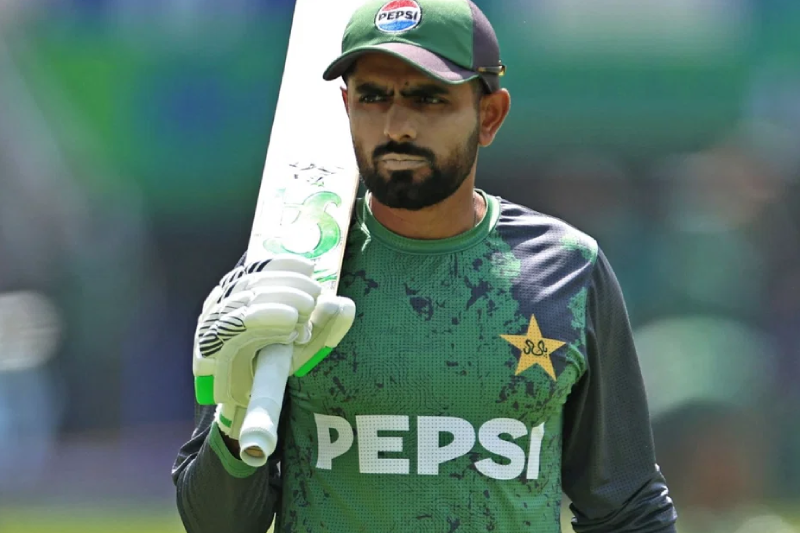
Babar Azam has established himself as the defining batsman of the current era, topping international cricket’s run-scoring charts from 2020 to 2025 with a staggering 8,825 runs across all formats.
The Pakistan star’s remarkable aggregate over this six-year period places him clear at the summit, ahead of some of cricket’s greatest contemporary batsmen including Joe Root, Mohammad Rizwan, Virat Kohli, and emerging talents like Shubman Gill. His consistency across Tests, ODIs, and T20Is confirms his status as the standout run machine of the decade so far.
Babar’s Monumental Achievement
Babar Azam’s 8,825 runs from 223 innings across all three formats represents an extraordinary volume of run-scoring that no other player has matched during this period. The achievement demonstrates not just raw accumulation but remarkable consistency averaging approximately 1,470 runs per year while maintaining standards across the diverse demands of Test cricket, ODI batting, and T20 stroke-play.
His ability to dominate across formats separates him from specialists who excel in one or two formats but struggle to replicate success in others. Babar has proven equally adept at Test cricket’s technical demands, ODI cricket’s balance between accumulation and acceleration, and T20’s requirement for innovative aggression a rare combination that marks cricket’s true all-format greats.
The six-year window from 2020 to 2025 encompasses various challenges—the COVID-19 pandemic’s disruptions, touring in diverse conditions from subcontinental turners to bouncy Australian pitches, facing quality bowling attacks across nations, and managing captaincy pressures during portions of this period. That Babar maintained such prolific output despite these variables underscores his mental fortitude and technical excellence.
Root’s Red-Ball Dominance
England’s Joe Root sits second with 7,892 runs from 172 innings a remarkable tally driven largely by his Test cricket dominance. Root’s statistical output from fewer innings than Babar highlights his exceptional Test match productivity, where he’s compiled countless centuries and double-centuries that have defined England’s recent red-ball cricket.
Root’s Test-focused approach means his run total comes predominantly from cricket’s longest format, where scoring opportunities are more abundant but technical demands are highest. His ability to convert starts into massive scores and bat for extended periods has made him one of Test cricket’s modern masters, even as his white-ball contributions remain valuable.
The 933-run gap between Babar and Root reflects Babar’s additional productivity in limited-overs formats where he’s been equally prolific. While Root concentrates his genius on Test cricket, Babar spreads his excellence across all three formats a different approach that explains the aggregate difference.
Rizwan’s Three-Format Reliability
Mohammad Rizwan’s presence at third with 7,634 runs from 204 innings showcases his remarkable evolution from primarily a Test wicketkeeper to a three-format batting mainstay. His run total reflects not just his wicketkeeping duties but his emergence as one of Pakistan’s most reliable and consistent batsmen across all formats.
Rizwan’s productivity is particularly impressive given the additional physical and mental demands of wicketkeeping. Managing keeping responsibilities while maintaining batting excellence requires exceptional fitness, concentration, and energy management factors that make his run accumulation even more remarkable.
His partnership with Babar in white-ball formats has been particularly productive, with the pair forming one of international cricket’s most successful opening combinations. Their complementary styles Babar’s classical elegance combined with Rizwan’s innovative aggression have anchored Pakistan’s batting across ODIs and T20Is during this period.
Elite Company in Top Six
The top six run-scorers from 2020-2025 represent cricket’s contemporary elite:
Kusal Mendis (Sri Lanka) follows with 6,571 runs from 201 innings, demonstrating Sri Lankan cricket’s continued ability to produce quality batsmen despite infrastructure and administrative challenges. His consistency across formats has been crucial for Sri Lanka’s competitiveness during this period.
Virat Kohli (India) with 6,531 runs from 179 innings remains a towering presence despite being statistically behind younger contemporaries. Kohli’s position reflects both his enduring class and perhaps a slight dip from his peak years when he dominated run charts globally. Nevertheless, his aggregate confirms he remains among the world’s elite batsmen.
Shubman Gill (India), the youngest name in this group, has accumulated 6,514 runs from just 165 innings a remarkable strike rate that suggests he could challenge the top positions as his career progresses. His rapid accumulation from fewer innings highlights his exceptional talent and India’s batting depth that allows a player of his quality to emerge as a future star.
Format Distribution and Versatility
While the aggregate numbers impress, Babar’s achievement becomes even more significant when considering format distribution. Maintaining excellence across Test cricket’s technical demands, ODI’s strategic complexity, and T20’s explosive requirements represents a challenge few batsmen master completely.
Specialists often dominate one format Root in Tests, certain players in T20 leagues but struggle to replicate that success across all three. Babar’s ability to adjust his game to each format’s demands while maintaining consistency demonstrates technical versatility and mental adaptability that defines truly great batsmen.
His T20I record includes being the fastest to various run milestones, his ODI statistics feature numerous centuries and match-winning innings, and his Test cricket showcases classical technique and temperament for long innings. This complete package across formats is increasingly rare in modern cricket where specialization often trumps versatility.
Pakistan’s Batting Anchor
For Pakistan cricket, Babar’s statistical dominance carries enormous significance. In an era where Pakistan has experienced significant turbulence captaincy changes, coaching turnover, administrative instability, and inconsistent team performances Babar has provided the one constant: elite-level run-scoring across all situations.
His aggregate from 2020-2025 doesn’t just lead the world; it anchors Pakistan’s batting across formats and provides the foundation upon which team strategies are built. When Babar fires, Pakistan typically competes; when he fails, their batting often struggles a dynamic that reflects both his quality and Pakistan’s relative lack of comparable batting depth.
The fact that Pakistan places two players Babar and Rizwan in the top three run-scorers globally demonstrates the nation’s batting strength in this period, even as other aspects of their cricket have faced challenges. This batting excellence has kept Pakistan competitive in major tournaments and bilateral series despite bowling and fielding inconsistencies.
Also read this: South Africa Names T20 World Cup 2026 Team
Historical Context and Legacy
Babar’s achievement of topping international run charts from 2020-2025 positions him alongside Pakistan’s batting greats who dominated their eras. Previous Pakistani legends like Javed Miandad, Inzamam-ul-Haq, and Younis Khan led run-scoring charts during their peaks; Babar now joins that pantheon as the defining Pakistani batsman of his generation.
Comparisons with contemporary greats like Kohli, Root, and Steve Smith will define discussions about Babar’s legacy. While each player brings different strengths and operates in different team contexts, Babar’s statistical superiority during 2020-2025 provides compelling evidence for his claim as this era’s premier batsman.
His ability to maintain this production while captaining Pakistan during portions of this period dealing with the immense pressures, distractions, and responsibilities that captaincy entails further enhances his achievement. Many great batsmen’s statistics suffer under captaincy burdens; that Babar topped run charts while leading Pakistan speaks to his mental strength and focus.
Babar Azam’s status as international cricket’s leading run-scorer from 2020 to 2025, with 8,825 runs across 223 innings, confirms his position as the defining batsman of the current era. His consistency across all three formats, volume of runs, and ability to maintain excellence amid various challenges establishes him firmly at the top of contemporary batting hierarchies.
While elite company including Joe Root, Mohammad Rizwan, Virat Kohli, and Shubman Gill occupy positions below him on the run charts, none have matched Babar’s combination of volume, consistency, and all-format versatility during this six-year period. For Pakistan cricket, his achievement provides statistical validation of what fans have witnessed a generational batting talent operating at his peak and carrying his team’s batting fortunes across formats and conditions.
As this decade progresses, Babar’s challenge becomes maintaining this standard and extending his statistical advantages over chasing contemporaries. For now, the numbers speak clearly: from 2020 to 2025, no batsman in world cricket has scored more runs than Babar Azam a simple, powerful statement of his dominance during cricket’s current era.
Keep conntected with us Facebook,Youtube and Twitter for latest Sports news happening around the globe.